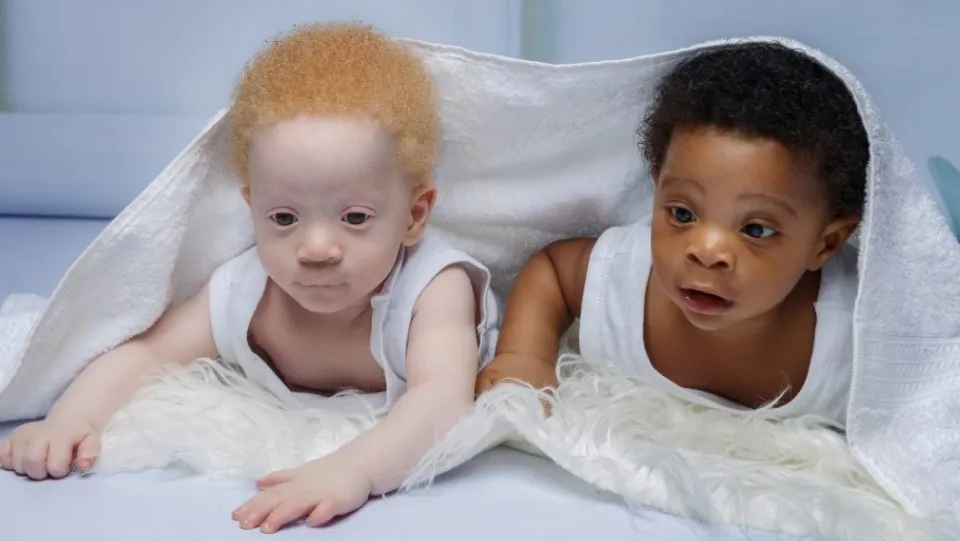
When Stacy and Babajide Omirin imagined expanding their family, their dream was simple: give their daughter, little Demilade, a baby brother she could grow up with. As a young couple living in Lagos, Nigeria, they entered their second pregnancy with excitement and hope. Nothing, however, prepared them for the incredible journey that was about to unfold.
A Routine Check That Changed Everything
During a routine prenatal appointment, Stacy lay quietly as the technician slid the ultrasound wand across her belly. She expected the usual heartbeat check and measurements. Instead, the room suddenly filled with hushed surprise. The doctor looked up and smiled in a way that made Stacy’s heart race.
“You’re carrying two babies.”
Twins.
The news hit her like a wave—overwhelming, joyful, and terrifying all at once. She laughed, then cried, then laughed again. Babajide could hardly believe it; he kept repeating, “Two boys? Two boys?” as though the idea needed time to settle in.
From that moment forward, the couple prepared for double feedings, double cries, double love. But even then, they had no idea just how extraordinary their twins would be.
A Birth Full of Wonder
On February 26, 2019, Stacy was brought into the hospital for her scheduled C-section. At 31 years old, she felt confident yet nervous, eager to hold her sons for the first time. The medical team moved efficiently, and within moments, the operating room was filled with the sound of a strong, healthy newborn’s cry.
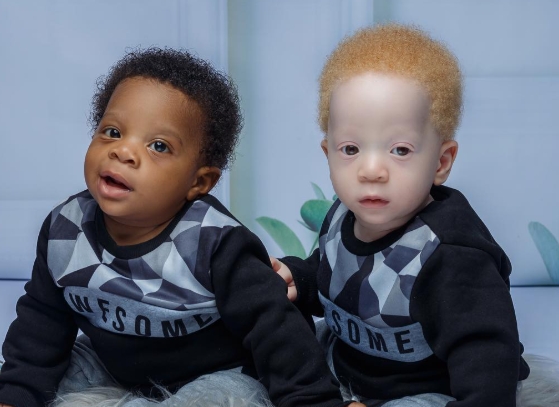
The first baby, Daniel, entered the world with rich brown skin and tight black curls—every bit the image of his father and big sister.
But the room shifted when the second baby was lifted from her womb. As the doctor held him up, a collective gasp echoed through the staff.
The baby’s skin was pale cream. His hair shone in soft golden curls. His eyelashes were light. He looked as though he belonged to an entirely different ancestry.
Stacy blinked in confusion. “Is he… mine?” she whispered, half laughing, half stunned.
One nurse clapped a hand over her mouth and muttered, “These are the most unidentical twins I have ever seen.”
Soon more nurses drifted in, each curious to witness the astonishing sight: twin boys, born minutes apart, yet appearing as though they came from two different worlds.
Meeting Their Sons
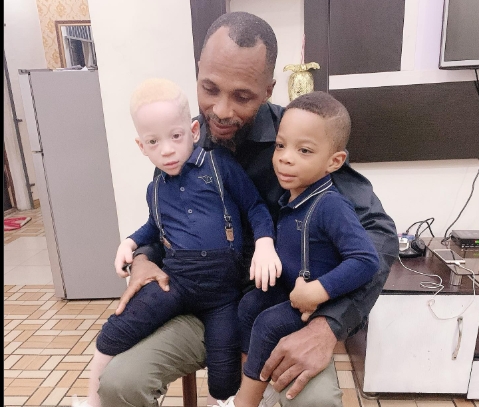
When Stacy was finally wheeled into recovery, Babajide stood waiting. The nurses placed both boys into his arms, Daniel nestled on the left, David on the right.
He stared at them silently, eyes filling with tears.
“How is this possible?” he asked in wonder.
Stacy could see his shoulders shaking. For ten long minutes, he simply gazed, speechless, moving his eyes from one baby to the other, trying to absorb the miracle. At last he spoke:
“These boys… they are God’s artwork.”
It was Babajide who first called David “Golden,” a nickname that quickly became part of their daily vocabulary. “Mr. Golden,” he would say, his voice warm with affection.
Understanding David’s Condition
Within hours of the birth, doctors explained what made David’s appearance so unique. He had oculocutaneous albinism, a genetic condition caused by reduced melanin production. It affects skin, hair, and eye pigmentation and can sometimes influence vision and sensitivity to sunlight.
Though the diagnosis frightened Stacy at first—she worried for her son’s safety, health, and future—the doctors assured her that many children with albinism live full, healthy lives with proper care.
In Nigeria, albinism is not extremely rare; some estimates suggest more than two million people in the country live with it. Still, social stigmas and dangerous superstitions persist in certain regions. The Omirins knew they would need to protect and educate, but so far, their community had embraced both boys with curiosity and love.
Growing Into Their Personalities
As the twins grew, their differences became even more striking—not just in appearance, but in temperament.
Daniel, energetic from the start, loved attention. He learned to crawl first, talk first, and always seemed ready to charm the nearest adult. Meal time, especially, was his favorite part of the day, and he greeted each plate with enthusiasm.
David, meanwhile, was quieter and observant. He watched carefully before attempting new things, studying every detail of his surroundings. He enjoyed gentle games, soft music, and being held close.
Yet despite their opposite natures, they were inseparable. They shared toys, traded giggles, and often fell asleep holding hands. Their bond was unshakable—two halves of the same miracle.
Reactions From the Public
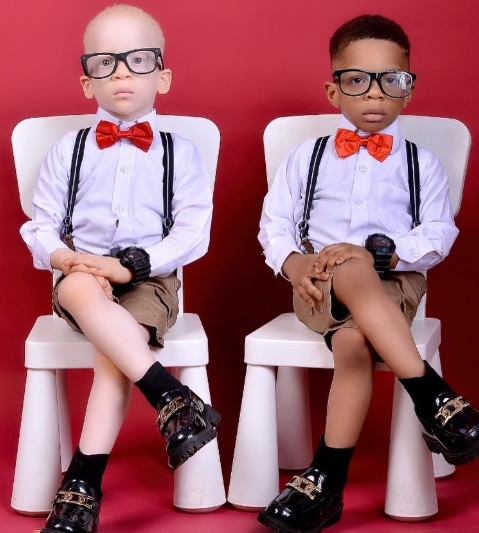
Whenever Stacy stepped out with her children, she found herself the center of attention. People would stop mid-stride, mesmerized by the striking contrast between the boys.
“Madam… which one is yours?” strangers would ask, bewildered.
She would simply laugh. “Both of them,” she’d reply proudly.
But disbelief often lingered in their expressions. More than once, people insisted she was joking. Some even assumed she was a nanny caring for children of two different families.
Stacy understood the surprise; she herself still found their appearance breathtaking. “Every day,” she told friends, “I look at them and still feel amazed.”
A Family United in Love
Over time, the Omirin family grew used to the curious stares and endless questions. What mattered was that both boys were thriving. David’s albinism required extra sun protection and regular vision checks, but he faced no serious complications. Daniel took on the role of protective older-by-minutes brother, often sticking close by David’s side.
For Stacy and Babajide, the twins were a reminder of life’s unpredictability and beauty.
“They are our miracle,” Stacy said. “Different on the outside, but so alike in their love.”
Everywhere they go, the Omirin twins show the world a simple truth: family is not defined by matching features, but by the love woven between hearts.