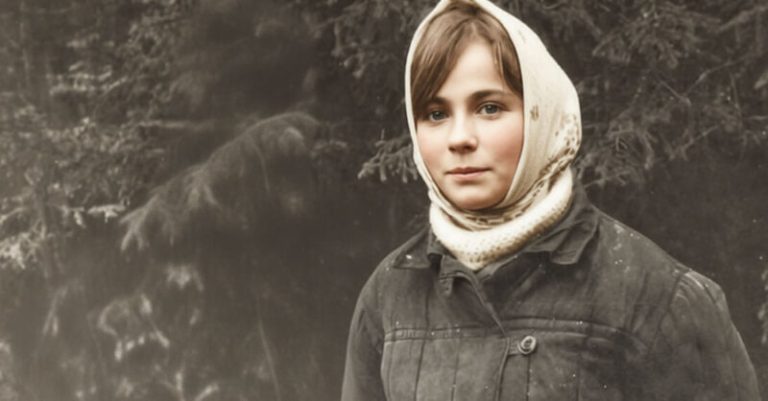
Descending into the cool cellar, Lidia lit a kerosene lamp, and its soft glow revealed familiar shapes. She mentally counted her supplies: three bottles of homemade tincture wrapped in straw, a barrel of sauerkraut with its tart childhood aroma, another filled with soaked apples and pickles. In the far corner, sprinkled with golden sand, lay firm potatoes and a fragrant braid of onions. She was already planning the menu for tomorrow’s celebration—she would need beets for her husband’s favorite vinaigrette, so she’d stop by her neighbor Taisia to borrow some.
The thought of Vladimir warmed her heart. Tomorrow he was supposed to return—alive, unharmed, as the whole village whispered, as if fate itself had shielded him from the steel storms of war. When he crossed their threshold, a new shining chapter of their life would begin, filled with future children’s laughter and quiet hope. Until the war had come roaring from the west, heaven had sheltered them, sparing them from hunger and cold that destroyed so many of their neighbors. How many innocent souls that terrible winter had taken…
She loved her husband with all her soul, though their marriage, arranged back in 1938 by both families, had begun without love—only duty. But over the quiet years, caring for the home together, her feelings grew so deep that life without him seemed impossible.
For three years they walked side by side, yet the cradle in their home remained empty. Vladimir began hinting that she was “faulty,” growing impatient as his older brother, only a few years ahead, already had three children. He adored his nephews and dreamed of a house full of kids—at least three sons and a daughter. But then the war came. When she bid him goodbye in 1941, she wept, devastated by the loneliness of their childless home.
A year later, she thanked heaven she had no child to protect—those were merciless times. That winter she lost both parents, accused of helping partisans. She herself fled into the forest and joined a partisan group. After their village was liberated in late 1942, she stayed behind among the ashes, waiting for her husband.
And finally, the joyful news arrived: Vladimir and his brother Gennady were coming home.
She prepared a feast at her in-laws’ yard, cooked all day, cleaned, and on the eve of their arrival fell asleep exhausted. The next morning she woke before dawn, made her husband’s favorite dishes, braided her hair, put on a blue dress with tiny white flowers, and sat by the window waiting.
But suddenly there was barking, shouting, laughter. The brothers had arrived earlier than expected. Vladimir stepped off the army truck and silently embraced her. She pressed her face to his uniform, recognizing the forgotten scent of leather and tobacco.
Later, while helping her mother-in-law set the table, she kept brushing against him, just to make sure he was truly there. Old Taisia raised a toast for their return, urging them not to delay in giving her more grandchildren. Vladimir laughed and pulled Lidia closer. She whispered that she would give him many children.
—
1948
Three years passed since his return, and still there were no children. Vladimir grew more irritable.
“Maybe they were right saying something’s wrong with you,” he snapped.
“How am I to blame?” she pleaded. “I want a child as much as you do.”
He growled about his brother celebrating a fifth child. When she timidly suggested the problem might lie with him as well, he exploded:
“You think I can’t father children? I know I can!”
A dreadful suspicion rose in her.
“Vladimir… do you have a child?”
“No,” he muttered, turning away.
“Look at me.”
He could not.
She touched his shoulder. “Who was she?”
“A nurse in the hospital. In ’43. It… just happened. She wrote later that she was expecting, then another letter saying the baby didn’t survive.” He spoke with cold detachment.
“You loved her?” she whispered.
“Of course not. I was a man alone at war.”
“And I waited for you, prayed for you. And you…”
He dismissed her pain. “Running with partisans, were you so faithful?”
“Don’t you dare!” she cried. “I kept myself only for you!”
He shouted that he was a man with needs. Lidia ran outside in tears. He came home drunk at night. In the morning he begged forgiveness. She forgave—because she still loved him.
But harmony didn’t last. Months passed; she visited a village healer, Grandma Evdokia, for herbs to help her conceive. The old woman told her gently: “Be humble. Whatever happens, endure.” She also promised Lidia three children from two pregnancies.
One day, returning from errands, Lidia discovered Vladimir with her friend Glafira—his frequent visits had become an affair. Worse, Glafira was three months pregnant.
“Congratulations,” Lidia whispered and fled.
Vladimir demanded divorce so he could legitimize the child. Lidia agreed, packed her things, and with nowhere to go, hid in an old wartime dugout. The next morning she went to Grandma Evdokia, who took her in.
Three months later the divorce was finalized. Only then did Lidia learn she herself was pregnant—most likely from their last days together. But she didn’t tell Vladimir. Why bind herself to a man who wanted another woman? She moved permanently to Evdokia’s village.
“You did right,” the old woman said. “With him, only misery would follow.”
Her prophecy was tragic and true: years later, Vladimir—now a district chairman—was arrested for embezzlement and labeled an enemy of the people. Glafira was sentenced to fifteen years in labor camps. Their infant son, Zakhar, went to his grandparents.
Meanwhile, Grandma Evdokia taught Lidia everything she knew and eventually passed away. Lidia gave birth to a healthy daughter, whom she named Evdokia. The village welcomed the young “heiress” of the healer. People sought her herbal remedies, and she became the local secretary at the council.
One day the school principal, Sergey Nikolaevich, visited seeking the old healer’s herbal mixture for his sickly daughter, Maria. Lidia assured him she knew the recipe. He offered to help around her home; their bond quietly grew. Maria adored Lidia, and little Evdokia loved him in return.
During a major inspection in the region, Lidia learned Vladimir had been sentenced to death, and Glafira imprisoned. Their son would be raised by Gennady. Lidia realized fate had spared her.
Sergey accompanied her through these difficult days, and soon their mutual affection blossomed into love. One evening he asked, half-seriously, whether she would allow him to be father to her daughter. She replied only if he allowed her to be mother to his. They laughed—and shortly after, married.
Waking the morning after their wedding, Lidia felt true peace. Years later they had a son, Viktor. She understood the prophecy: two pregnancies, three children—her own two, plus Maria, fully healed.
Lidia continued healing villagers, teaching her daughter the craft. And in their warm home, filled with children’s laughter and the scent of dried herbs, she finally understood what Grandma Evdokia had meant by humility. It wasn’t weakness—it was strength. It was acceptance. It was the quiet doorway through which happiness finally entered her life.